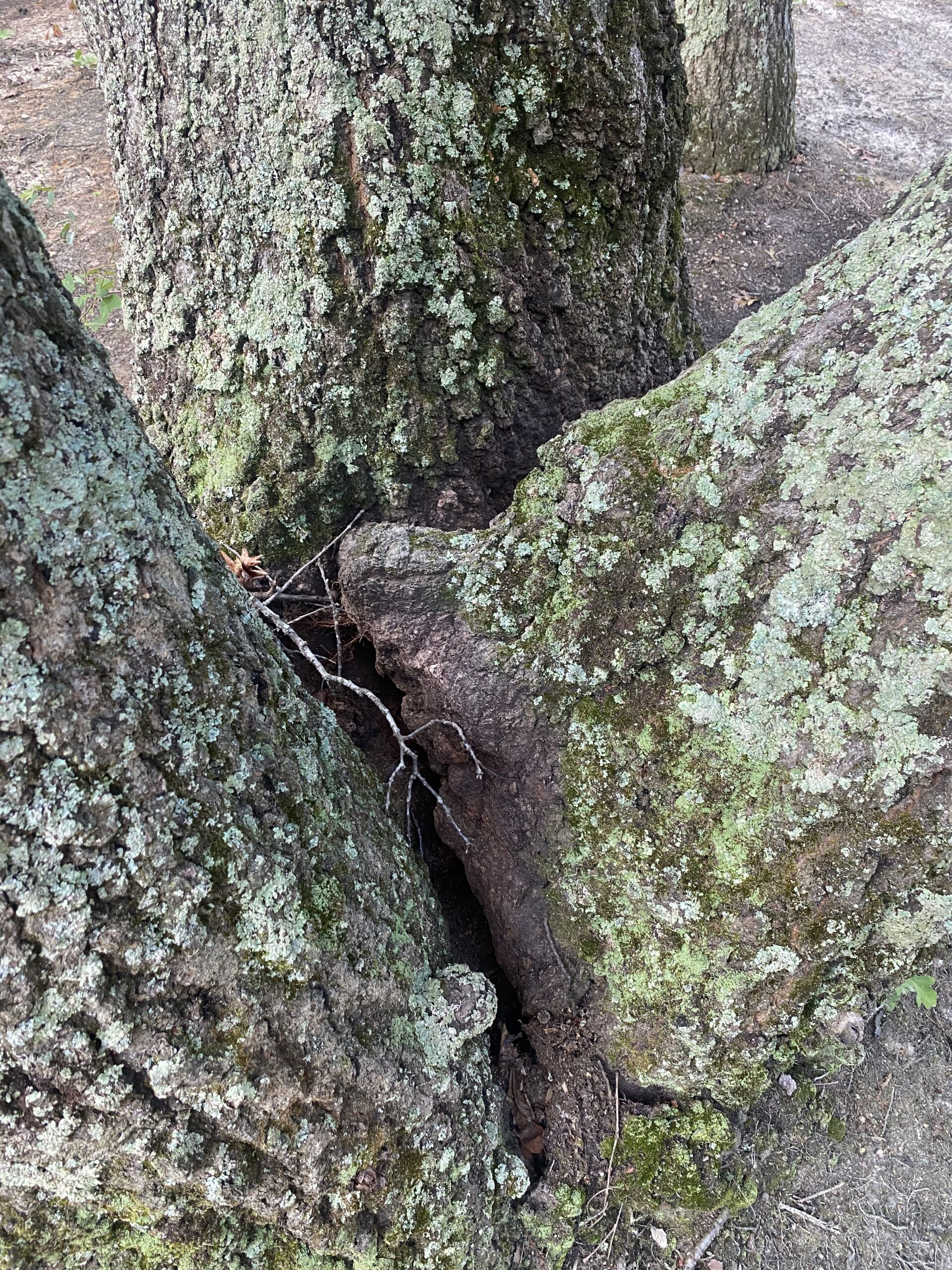
Codominant Trees & Frost Fracture Tree Damage
Learn how to identify risk signs early & protect your trees from structural damage. Get a Free EstimateIndicators of Codominant Tree Risks
“V” unions more likely to fail
Decay at joint
Fluid leakage
Woody growth in the union
Visible cracks
Structural weaknesses
Tree pruning and correction can reduce the risk of failure. In severe cases, removal might be required. Our team assesses trees professionally and recommends the safest solution.
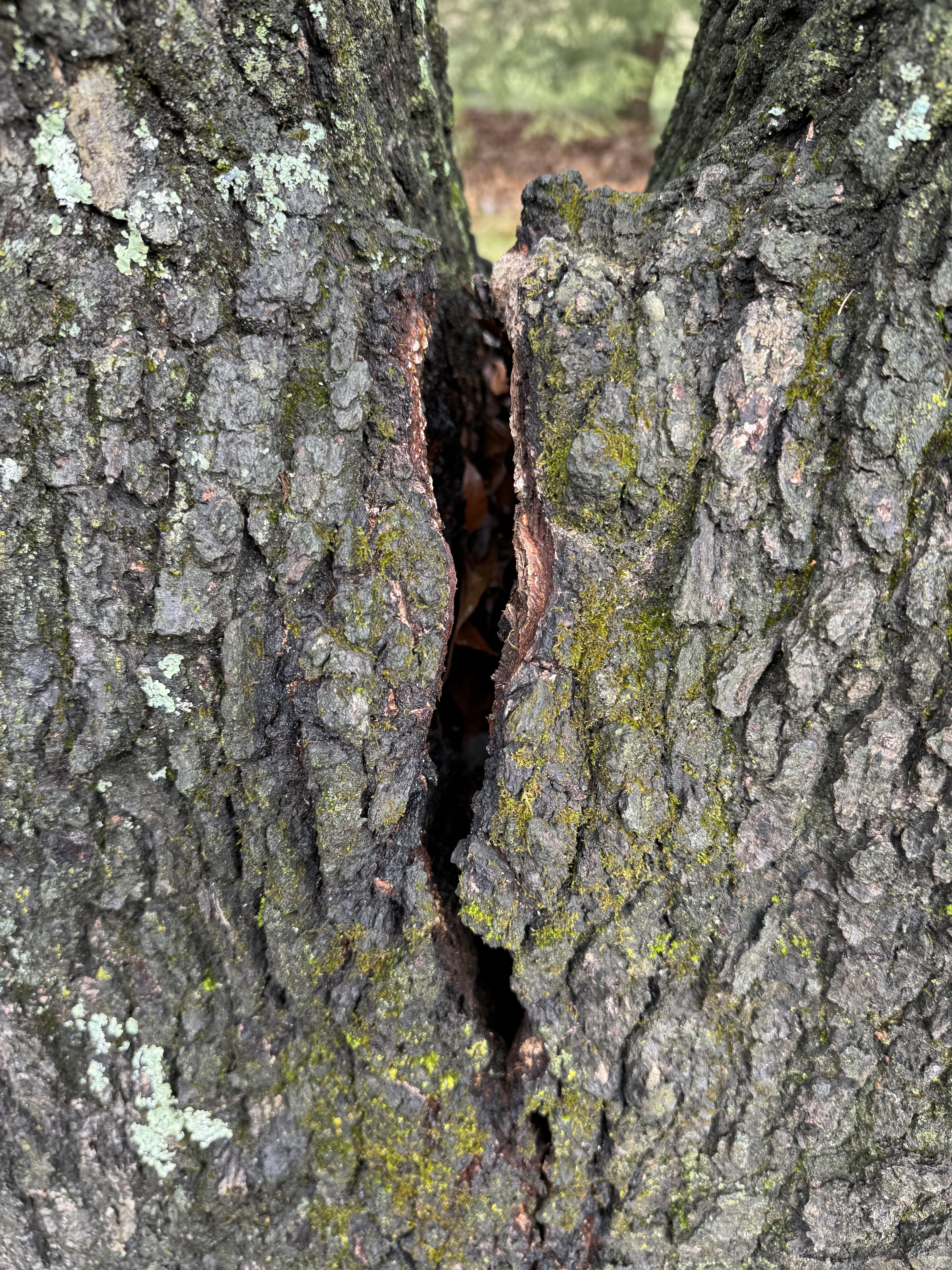
How Do Frost Fracture Damage Trees?
A frost fracture breaks the underside of the bark, which is responsible for new growth and healing. The wider the split, the more open the gap, and the more the tree’s inner wood is exposed to the elements. This can cause damage down the line, as this opening makes the tree vulnerable to fungal and bacterial infections or pests.
A particularly deep frost crack may also disrupt moisture and nutrient transport, potentially leading to long-term weakness. However, frost fracture don’t usually kill a mature, healthy tree. Trees can callus over the damaged area of a small crack and form scar tissue, while larger damage may be able to be treated by a certified arborist.
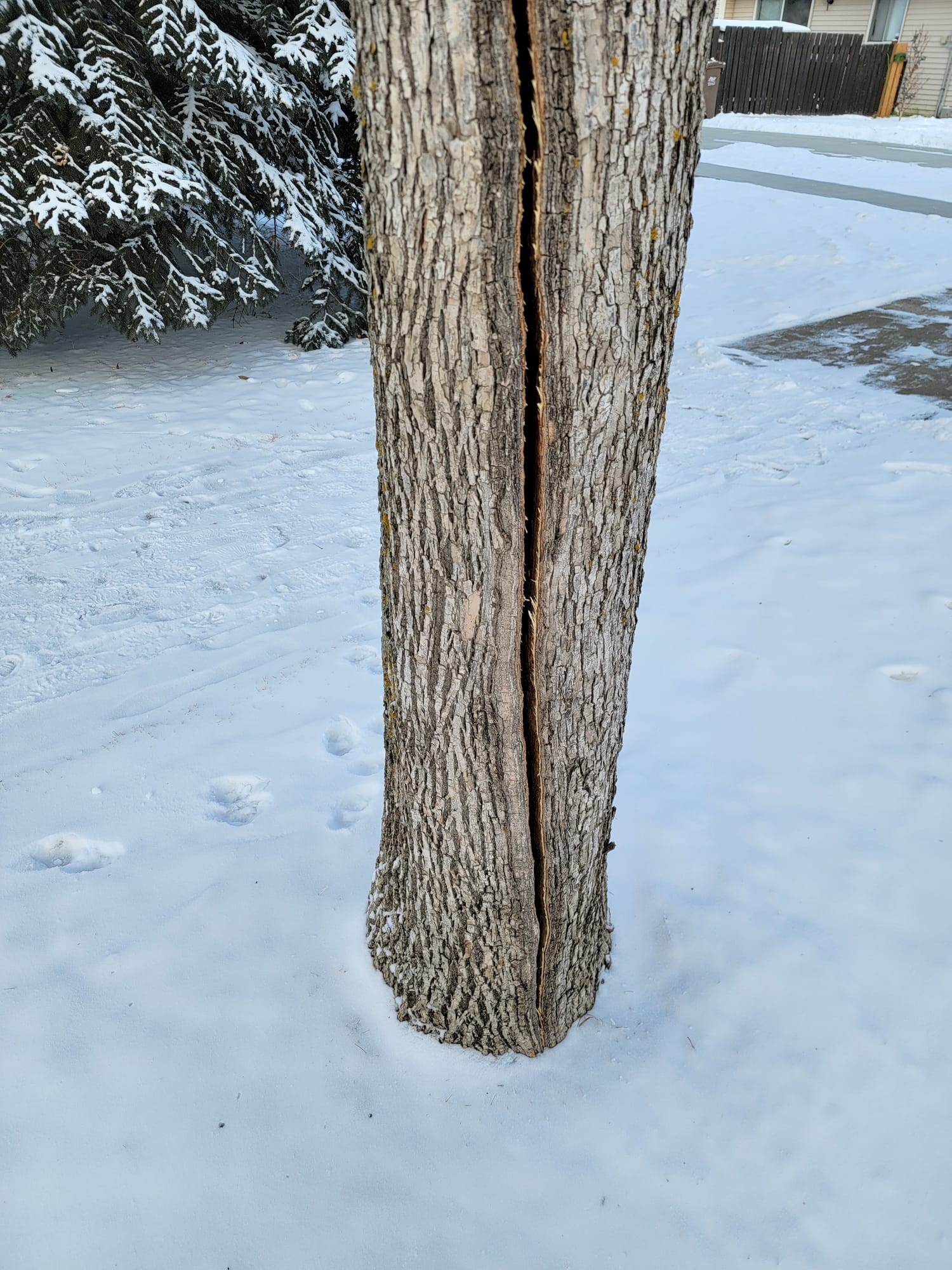
How to Protect Trees From Frost Cracking
Urban areas often experience major temperature swings in late fall and early spring, increasing the risk of frost fracture. Homeowners can protect their trees during winter using a few simple seasonal care practices:
Preventing Frost fracture
Wrap the trunk
Use commercial tree wraps, burlap, or plastic guards during winter to insulate the bark and prevent rapid expansion and contraction.
Maintain consistent watering
Water trees well during fall before the soil freezes. Hydrated wood handles temperature shifts more safely.
Mulch around the base
Apply 2–4 inches of mulch around the tree base to retain soil moisture and stabilize temperature.
Avoid late-season pruning
Prune in late winter or early spring while trees are dormant. Fall pruning promotes fresh growth that is more vulnerable to frost damage.